
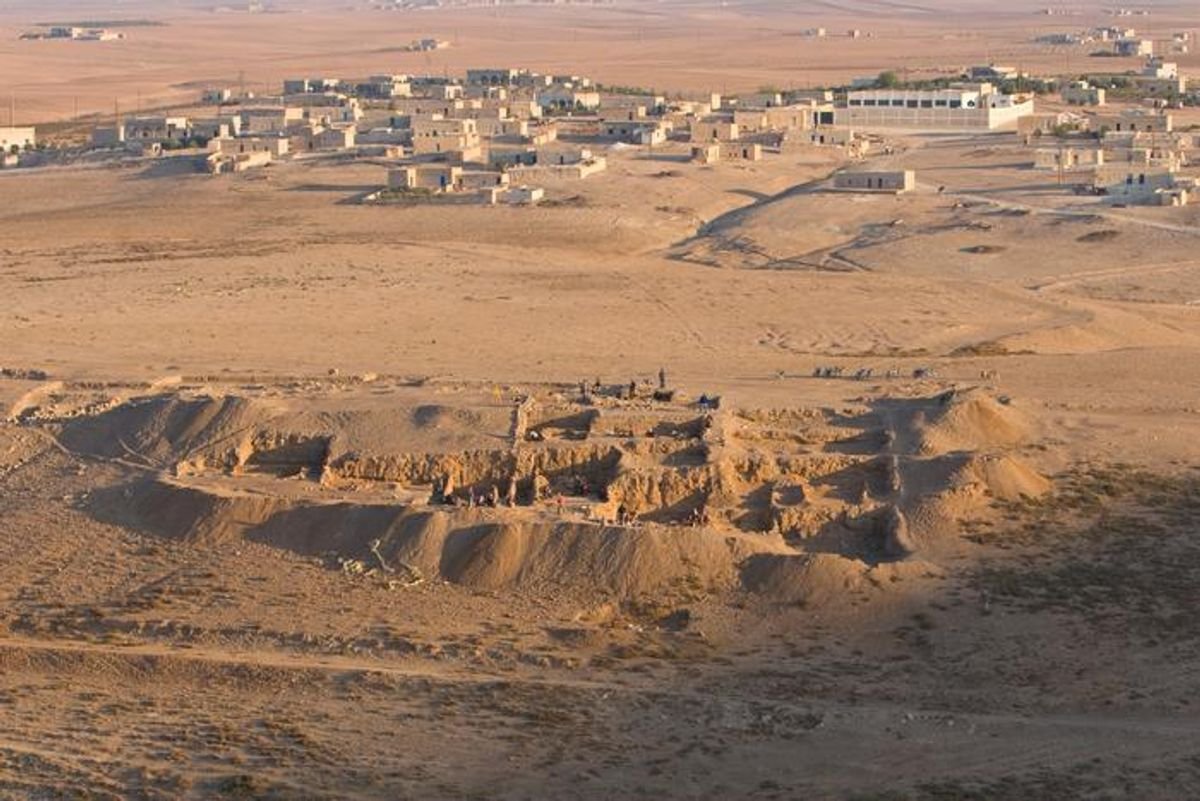
Ancient Teeth Carry Clues on Farming Villages That Welcomed Outsiders with Open Arms

Once history’s first farmers settled down to start a more sedentary life, they began to see the value of close-knit communities. And they didn’t just forge bonds with their immediate neighbors; eventually, they welcomed outsiders into their villages as well.
A new study published in Scientific Reports has shown how early farming communities evolved over time, revealing them to be surprisingly welcoming to just about everyone, regardless of where they came from. By examining ancient teeth from archaeological sites in Syria, researchers were able to trace patterns of mobility and gain insight on the lives of villagers as agriculture took off.
A New Lifestyle During the Neolithic
The Neolithic period (lasting from around 11,600 to 7,500 years ago) was a crucial turning point in history that saw the arrival of agriculture, animal domestication, and an overall shift from a nomadic lifestyle to a sedentary one.
During the first stage of this period, the Pre-Pottery Neolithic A (10th to 9th millennia B.C.E), people living in the Levant began to dip their toes in the farming lifestyle and stuck to smaller groups that didn’t have much contact outside of their immediate bubble.
It wasn’t until the Pre-Pottery Neolithic B stage (9th to 7th millennia B.C.E) that people really started venturing beyond their settlements and developing connections with others from different areas. By the Late Neolithic (7th to 6th millennia B.C.E.), these connections grew even deeper, to the point where regions started to share pottery styles.
Read More: What Ancient Teeth In Cave Can Tell Us About The Bronze Age Collapse
Tracking Movements With Ancient Teeth
In the new study, researchers aimed to understand the evolution of mobility throughout the Neolithic by examining teeth from 71 people spanning across 5 archaeological sites in modern-day Syria.
Based on strontium and oxygen isotopes in tooth enamel, they were able to distinguish whether individuals grew up locally or moved to the site from a different area, according to a press statement on the study.
They found that while most individuals stayed local in their villages during the Pre-Pottery Neolithic, more people were on the move during the Late Neolithic. After centuries of relative isolation, mobility increased as people traveled to neighboring villages.
Women were especially mobile near the end of the Neolithic, relocating to new communities by way of marriage. At most sites, there may have been an emphasis on patrilocality, in which a married couple resides near the husband’s family.
Respecting Outsiders in Life and Death
During the early Neolithic, funerary practices were often linked with rituals in the home. This reflects the trend of people being increasingly tied to geographical locations, advancing ideas of ownership and group identity.
Individuals strongly valued their homes, decorating them in various ways and constantly rebuilding them on the same grounds over generations. A prime example of this can be seen in Çatalhöyük, a Neolithic site in modern-day Türkiye (Turkey) that dates back 9,000 years ago. Here, villagers decorated the insides of their homes with paintings and animal bones; one major motif incorporated bucrania, or the heads of bulls.
Villagers also buried the dead in their homes, placing them beneath raised platforms where they slept. In the new study, researchers uncovered multiple layers of human remains preserved at one of the sites, Tell Halula.
Grim as it may be, Neolithic peoples’ treatment of the dead also reinforces how respectful they were to outsiders. The researchers found that individuals buried together in the same house at Tell Halula included locals and non-locals, both treated with the same funerary practices. For example, deceased individuals from both groups were buried in the same seated position, and they were both buried alongside similar items like stone beads, tools, and marine shell belts.
The study has proven that Neolithic villages weren’t closed off — rather, they welcomed outsiders and made them part of their communities.
Read More: Neolithic DNA Analysis from Northwest Africa Reveals Some Hunter-Gatherers Held Out On Farming
Article Sources
Our writers at Discovermagazine.com use peer-reviewed studies and high-quality sources for our articles, and our editors review for scientific accuracy and editorial standards. Review the sources used below for this article: