
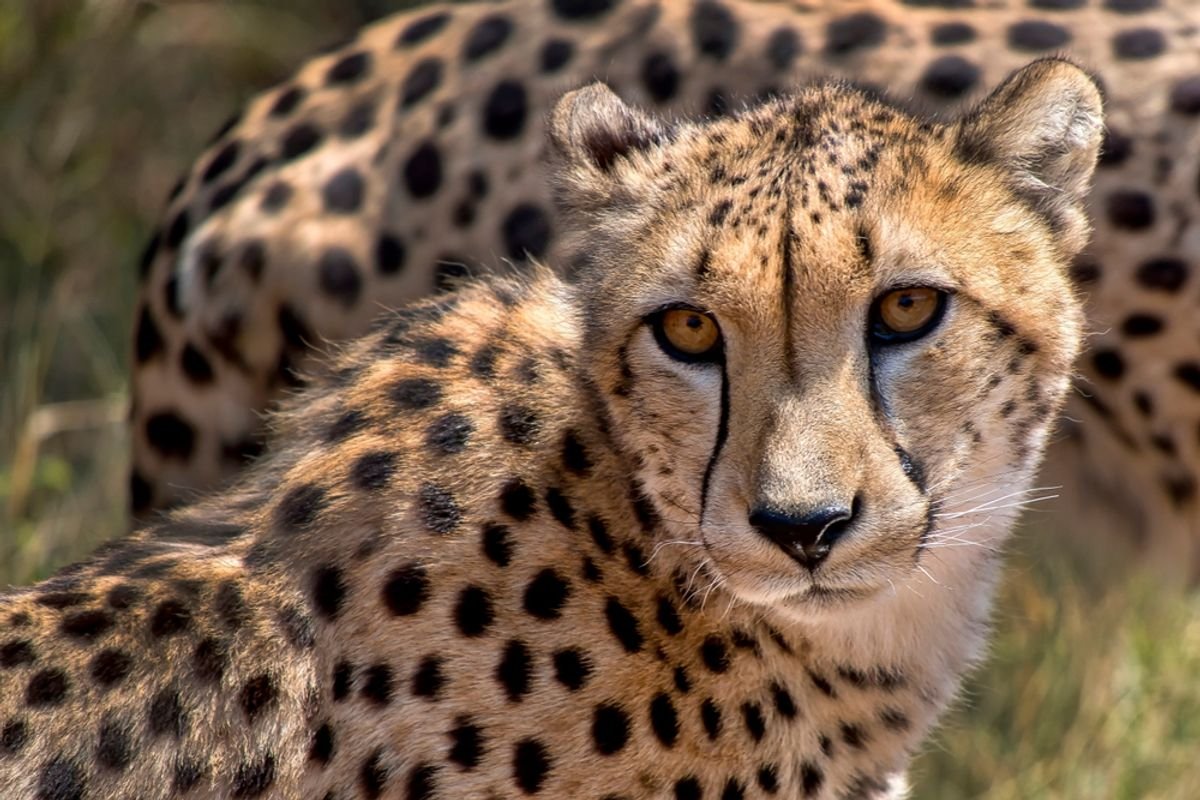
Ancient Mummified Cheetahs Found in Saudi Caves Rewrite the Species’ History — and Its Future

Seven naturally mummified cheetahs discovered in caves in northern Saudi Arabia, some dating back nearly 2,000 years, reveal that at least two cheetah subspecies once lived on the Arabian Peninsula. Genetic evidence from the remains shows the region supported a more diverse cheetah population than previously assumed.
Reported in Communications Earth & Environment, the findings clarify which cheetahs historically occupied Arabia, a question that has shaped discussions about restoring the species to the region. By recovering complete genome sequences from three naturally mummified cheetahs, something not previously achieved in big cats, the researchers show that cheetahs in Arabia were genetically more diverse.
The Vanishing Cheetah
In the 20th century, cheetahs disappeared from the peninsula, and most reintroduction proposals have assumed the area was home only to the Asiatic cheetah, a subspecies now reduced to a single small wild population in Iran.
Cheetahs historically occupied large parts of Africa and extended into western and southern Asia. Today, the species persists across only about 9 percent of that former range, with Asian populations reduced by roughly 98 percent. On the Arabian Peninsula, cheetahs are thought to have vanished by the 1970s.
Naturally Mummified Cheetahs in Northern Saudi Arabia
The mummified cheetah remains were discovered during fieldwork conducted in 2022 and 2023 in five caves near the city of Arar. Inside the caves, researchers found seven naturally mummified cheetahs alongside skeletal remains from 54 additional cats.
Radiocarbon dating shows that the remains span a wide time range. The oldest skeletal material dates to about 4,000 years ago. Two of the mummified cheetahs date to approximately 1,870 years ago and around 130 years ago, indicating that cheetahs persisted on the peninsula well into the historical period.
The state of preservation allowed researchers to extract ancient DNA from several specimens. Complete genome sequences were recovered from three of the mummified cheetahs.
Read More: Mummified Dogs Reveal Pre-Incan People Honored This Shepherd 1,000 Years Ago
Evidence of Multiple Cheetah Lineages
Genetic analysis revealed that the cheetahs were not all closely related. The most recent specimen is genetically closest to the Asiatic cheetah, aligning with earlier assumptions about the region’s late surviving populations. However, the two older mummified cheetahs — including the oldest dated individual — are genetically most similar to the Northwest African cheetah.
This pattern indicates that the Arabian Peninsula supported at least two distinct cheetah lineages over time. Rather than hosting a single, isolated population, the region appears to have been connected to broader cheetah populations spanning Africa and Asia, with different lineages present at different points in history.
What the Findings Mean for Conservation
The cheetah findings reflect a broader trend in conservation research that uses ancient DNA to inform modern reintroduction decisions. In one example, researchers analyzing ancient beaver remains from Britain found that historic populations were genetically distinct from any single surviving modern group. That work, published in Scientific Reports, helped guide discussions about which living beaver populations could be appropriate sources for reintroduction, even when an exact genetic match no longer exists.
Studies like this show how ancient DNA can provide a clearer picture of past population structure, especially for species that disappeared before detailed ecological records were kept.
The discovery, therefore, has practical implications for cheetah conservation in the region. If cheetahs in Saudi Arabia historically included lineages beyond the Asiatic subspecies, reintroduction efforts may consider a wider range of source populations.
The authors suggest that access to a broader genetic pool could improve the feasibility of re-establishing cheetahs on the peninsula, reducing reliance on the critically endangered Iranian population. More broadly, the study shows how genetic data recovered from ancient and historical remains can inform rewilding efforts by clarifying which populations once occupied a landscape.
Read More: Mummy Dinosaurs Now Shrouded in Clay Had Hooves like Horses and Long Duck Bills
Article Sources
Our writers at Discovermagazine.com use peer-reviewed studies and high-quality sources for our articles, and our editors review for scientific accuracy and editorial standards. Review the sources used below for this article: