
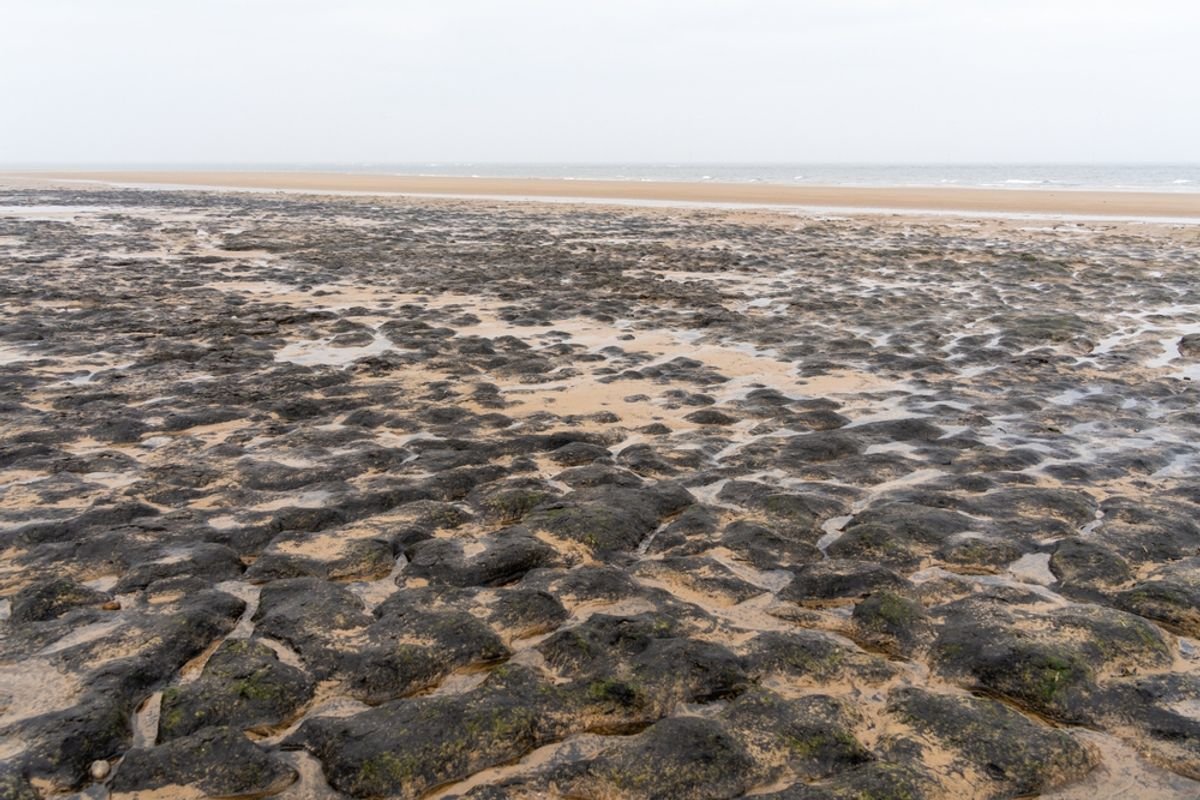
Ancient DNA Reveals Ice Age Forests Grew on the Lost Doggerland 16,000 Years Ago, Before It Was Swallowed by the North Sea
Thousands of years ago, forests spread across a landscape that linked Britain to mainland Europe. Rivers wound through stands of oak and hazel, animals like wild boar likely moved through the undergrowth, and early humans may have traveled or settled along its waterways. Today, that lost land — Doggerland — lies beneath the North Sea.
Now, a new study, published in Proceedings of the National Academy of Sciences, shows that Doggerland’s forests appeared thousands of years earlier than previously indicated. By analyzing ancient DNA from sedimentary samples in seafloor cores in the southern North Sea, researchers found that temperate trees were already growing there more than 16,000 years ago.
“We have reconstructed the environment of this lost land from the end of the last Ice Age until the North Sea arrived. We unexpectedly found trees thousands of years earlier than anyone expected — and evidence that the North Sea fully formed later than previously thought,” said lead author Robin Allaby in a press release.
Read More: This WWII Shipwreck Is Pouring Pollutants Into The North Sea
Reconstructing Doggerland

Map of Doggerland
(Image Credit: University of Bradford Submerged Landscape Research Centre & Nigel Dodds)
To piece together Doggerland’s ancient environment, researchers examined 252 sediment samples from 41 seafloor cores drilled along the course of a prehistoric river that once flowed across southern Doggerland.
The DNA showed that temperate woodland species — including oak, elm, and hazel — were growing there much earlier than pollen records from Britain suggested. Another warmth-loving tree, lime, also popped up about 2,000 years earlier than previously recorded in mainland Britain.
These early trees hint that parts of Doggerland may have served as small refuges during the late Ice Age, where woodland species managed to survive farther north than expected.
The Lost Trees of Doggerland
The DNA also revealed a surprising survivor. Researchers found traces of Pterocarya, a walnut relative thought to have disappeared from northwestern Europe about 400,000 years ago.
Its presence suggests the tree may have survived in isolated pockets of suitable habitat for much longer than was believed after it vanished.
These kinds of habitats are known as “microrefugia” — small areas where plants and animals manage to endure harsh climate periods while surrounding regions become inhospitable. Such refuges may help explain Reid’s Paradox, which asks how forests spread so quickly across northern Europe after the Ice Age.
A Landscape for People, Plants, and Animals
Wooded environments would have supported diverse wildlife and provided resources such as food, shelter, and fuel — conditions that could have attracted early human communities well before the documented Maglemosian culture appeared around 10,300 years ago.
“From a human perspective, this is the best evidence that Doggerland’s wooded environment could have supported early Mesolithic communities prior to flooding and may help explain why relatively little early Mesolithic evidence survives on mainland Britain today,” Allaby said.
The DNA record also indicates that Doggerland did not disappear as quickly as once thought. Parts of the landscape appear to have survived major flooding events — including the Storegga tsunami around 8,150 years ago — and may have remained above sea level until roughly 7,000 years ago.
“For many years, Doggerland was often described as a land bridge. Today, we understand that Doggerland was not only a heartland of early human settlement, but also that the presence of the land mass may have provided a refuge for plants and animals and acted as a fulcrum for how prehistoric communities settled and resettled northern Europe over millennia,” added co-author Vincent Gaffney, in the press release.
Much of that early history may now lie hidden beneath the waters of the North Sea.
Read More: Unsung and Underwater: 5 Sunken Cities From European Seas
Article Sources
Our writers at Discovermagazine.com use peer-reviewed studies and high-quality sources for our articles, and our editors review for scientific accuracy and editorial standards. Review the sources used below for this article: