
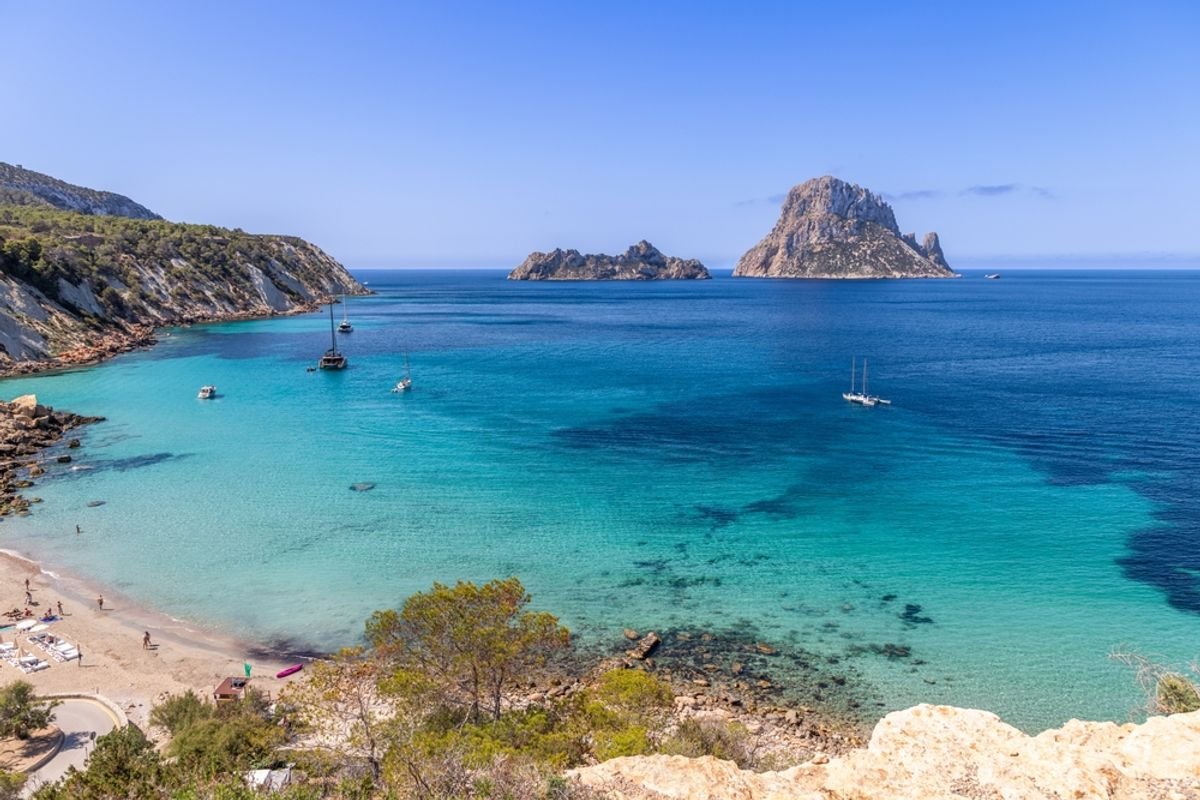
Ancient DNA Reveals Ibiza Was a Global Crossroads in the Medieval Mediterranean — and a Case of Leprosy

More than 1,000 years ago, Ibiza was a thriving hub across the Mediterranean. DNA from people who lived there reveals a population with origins spanning Europe, North Africa, and into the Sahara.
A new study in Nature Communications analyzed genomes from an Islamic cemetery and found that Ibiza’s population was shaped by migration and mixing across continents — including the first genetically confirmed case of leprosy in medieval Islamic Iberia. The findings position the island as part of long-distance networks that moved people, genes, and disease across the medieval world.
“These genomes show that people from both western and central Sahel became part of communities in Islamic Iberia,” said lead author Ricardo Rodríguez-Varela in a press release. “This is direct genetic evidence of the long-distance networks reaching the Sahel, as described in historical sources.”
Read More: Colliding Tectonic Plates Are Making the Iberian Peninsula Rotate Clockwise
Ibiza’s Medieval Population Was Shaped by Migration
The researchers analyzed ancient DNA from 13 individuals buried between the 10th and 12th centuries, when Ibiza was under Muslim rule following its conquest in 902 C.E.
The genomes indicate that some individuals are primarily European, others are primarily North African, and many show varying degrees of admixture between the two. Notably, no close biological relatives were identified among the individuals, suggesting the cemetery reflects a mobile, mixed population rather than tight family groups.
Historical and archaeological evidence indicates that Ibiza may have been sparsely populated before the Islamic conquest, meaning these communities were not just mixing but also helping build the island’s population from the ground up.
This diversity aligns with Ibiza’s role in a broader Mediterranean world defined by trade, migration, and shifting political control. Historical records describe two major waves of settlement: an initial influx following the Umayyad conquest and a later wave associated with the Almoravid dynasty in the 12th century.
Genetic modeling shows that North African ancestry entered the population just a few generations earlier — in some cases as recently as two to seven generations before these individuals lived, with estimates placing the main wave of mixing in the late ninth century, shortly after the island’s incorporation into the Islamic world.
Connections Reaching Across the Sahara
Two individuals showed clear Sub-Saharan African ancestry, one linked to present-day Senegambia, the other to southern Chad.
Their presence provides biological evidence of trans-Saharan connections described in medieval Arabic sources. These routes likely moved people through a combination of military expansion and slave networks linking North Africa with regions south of the Sahara.
“These genomes capture the moment when the Islamic world and the Christian societies of Iberia began to reshape each other,” said senior author Anders Götherström. “With ancient DNA, we can begin to see how these large historical processes unfolded in the lives of real people.”
Disease, Burial, and Everyday Life
The study also uncovered evidence of disease within the community. One individual carried Mycobacterium leprae, the bacterium that causes leprosy.
Despite the infection, his burial followed standard Islamic practices, with no indication he was treated differently in death.
“There is no evidence in the burial context that he was treated differently from others, a pattern also reported in contemporaneous Christian communities,” said Zoé Pochon, co-author of the study.
Further analysis showed the leprosy strain belongs to a lineage found across Europe between the 7th and 13th centuries.
Researchers also detected traces of other pathogens, including hepatitis B virus and human parvovirus B19, highlighting how the disease moved alongside people through these same connections.
On Ibiza, people from distant regions didn’t just pass through; they became part of everyday life on the island.
Read More: New Models Reveal If Neanderthals and Modern Humans Ever Met on the Iberian Peninsula During the Old Stone Age
Article Sources
Our writers at Discovermagazine.com use peer-reviewed studies and high-quality sources for our articles, and our editors review for scientific accuracy and editorial standards. Review the sources used below for this article: