
Ancient DNA Reveals a Pre-Inca Trade Network That Carried Parrots Alive Across the Andes to Coastal Peru

Long before the Inca Empire rose to power, brightly colored parrots were carried across the Andes Mountains — from the Amazon rainforest to Peru’s arid Pacific coast.
Archaeologists have discovered macaw feathers in ancient burials near Lima for decades. But the birds themselves normally live hundreds of miles away on the opposite side of the mountains.
New research, published in Nature Communications, suggests the parrots weren’t traded as feathers alone. Instead, they were transported alive, revealing a far-reaching trade network that linked rainforest, highlands, and coastal deserts long before imperial roads connected the region.
“We can now demonstrate with genetic and isotopic evidence that these parrots weren’t just traded as feathers — they were transported alive, across dramatic terrain, into coastal ritual contexts,” lead author George Olah said in a press release.
Read More: Does the Grand Civilization of the Inca Empire Still Exist Today?
Amazon Rainforest Parrots Found in Ancient Peru
By analyzing ancient DNA from parrot feathers discovered at Pachacamac, one of the most important religious centers of ancient Peru, researchers identified several rainforest species that had somehow made the journey to the coast.
The team combined ancient DNA sequencing, isotope chemistry, and landscape modelling to trace the birds’ likely origins and how they were transported across the region.
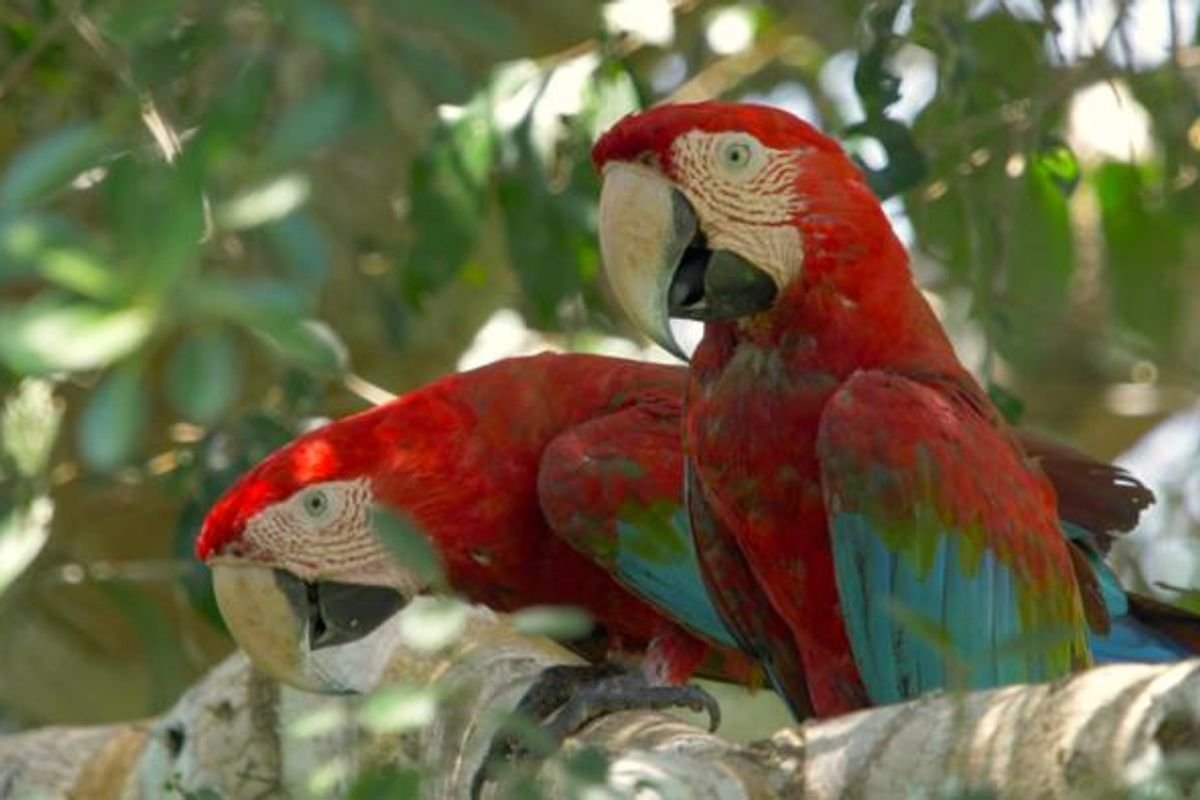
Genetic analysis revealed four species in the feather assemblage: the Scarlet Macaw, Blue-and-yellow Macaw, Red-and-green Macaw, and Mealy Amazon. All are native to humid Amazonian forests east of the Andes.
Yet the feathers were discovered more than 310 miles away (500 kilometers), on the Pacific coast.
The birds could not have made that trip on their own. Macaws typically remain within a home range of about 93 miles (150 kilometers) and are not known to cross the Andes’ extreme elevations.
“Our ancient habitat modelling confirmed that the western side of the Andes was just as inhospitable to these species one thousand years ago as it is today,” added Olah.
Evidence the Birds Arrived Alive
Isotope analysis showed that the parrots’ diets had changed. Instead of rainforest foods, the birds appear to have eaten maize and even marine protein, foods associated with coastal environments. The feathers also carried nitrogen signatures similar to those found in the diets of local people, suggesting the parrots were fed by their human caretakers.
Because feathers grow gradually, those chemical signals show the birds were kept alive for some time after arriving on the coast — long enough to grow new feathers in their new environment.
Transporting them there would have been a long and difficult journey. Travelers likely spent weeks or even months crossing steep mountain passes and rocky plateaus while keeping the birds alive along the way.
A Pre-Inca Trade Network
The findings reveal a complex system of exchange linking very different environments, much before the Inca Empire built its famous road network.
Using landscape modelling, the researchers identified possible routes traders may have used to move animals and goods across the Andes, including mountain corridors and river pathways connecting the Amazon basin with coastal settlements.
The parrots were likely prized for their vibrant feathers, which held cultural value across many pre-Hispanic societies. Colorful feathers were often used in ritual objects and high-status burials, symbolizing power, prestige, and connections to distant regions.
“This discovery challenges long-held assumptions that pre-Inca societies were isolated or fragmented,” explained Olah in the press release.
Beyond revealing ancient trade routes, the study also shows that ancient DNA can be recovered from delicate archaeological feathers — a finding researchers have rarely been able to achieve before. The approach could help track how animals and other organic materials moved through ancient trade networks.
Read More: Ancient Temple Ruins Shed Light on Life of Tiwanaku, a Thriving Pre-Inca Civilization
Article Sources
Our writers at Discovermagazine.com use peer-reviewed studies and high-quality sources for our articles, and our editors review for scientific accuracy and editorial standards. Review the sources used below for this article: