
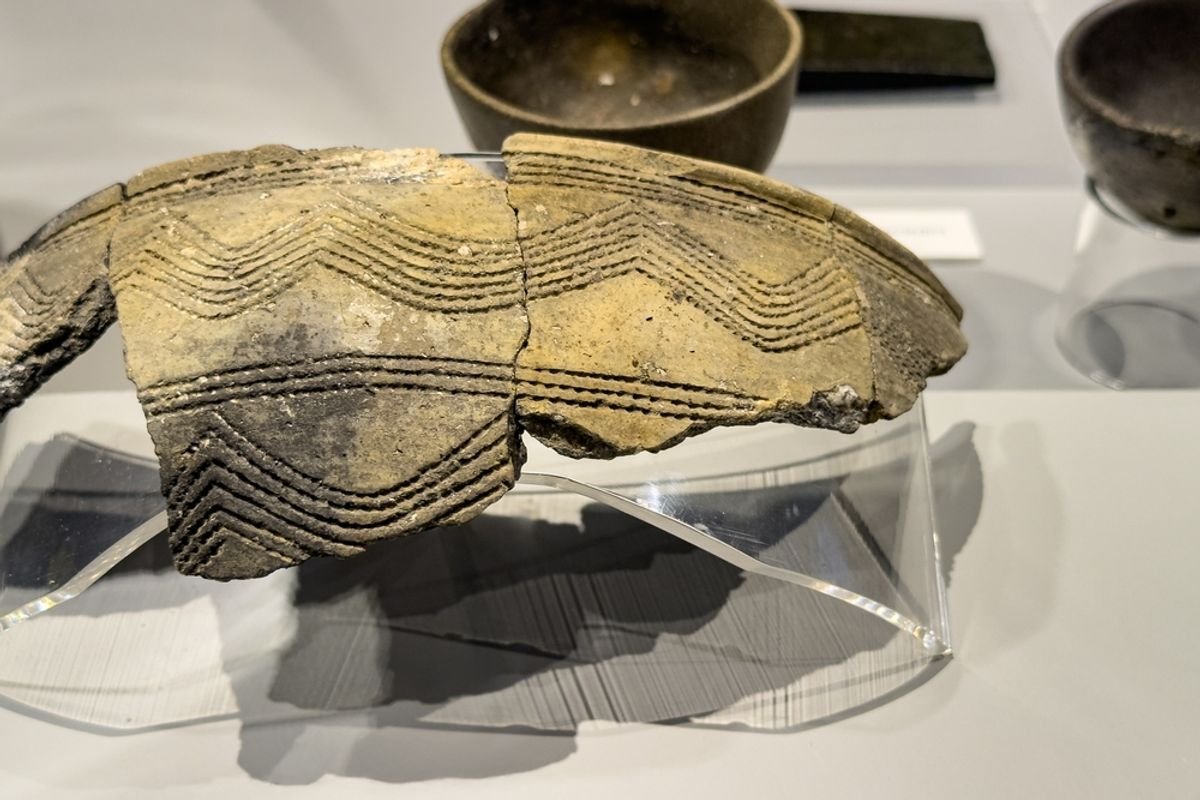
Ancient Cooking Ware Confirms Horses Were Domesticated in Early Bronze-Age Sicily

Taking a second look at pottery fragments excavated back in 2005 has rewritten a chapter of Mediterranean history. A team from the University of South Florida (USF) found traces of horse meat in ancient cookware from a Bronze Age site in Sicily. Their study, published in PLOS One, shows horses were present on the Italian island a full millennium earlier than previously thought, pushing their arrival into the early Bronze Age.
Discoveries like this highlight how central horses have been to human life by shaping diets, rituals, and entire societies.
“The horse was one of the most transformative animals in ancient civilizations, shaping mobility, warfare, hunting, agriculture, economy, and religion,” said archaeologist Davide Tanasi, who led the study, in a news release.
Horses’ Role in Ancient Civilization
The Bronze Age, roughly 3000 B.C.E. to 1200 B.C.E., depending on the region, marked a turning point for human development: complex societies flourished, agriculture expanded, and trade networks stretched across continents. Equids, horses and donkeys, played a key role in this transformation. Donkeys served as hardy pack animals in rough terrain, while horses, valued for speed and endurance, revolutionized travel and warfare.
Across Eurasia, horse domestication dates back to the 3rd to 4th millennium B.C.E. However, until now, there was no solid evidence that prehistoric Sicilians had access to horses, let alone consumed them.
Read More: Humans Domesticated Horses — New Tech Could Help Archaeologists Figure Out Where and When
Traces Of Horse Meat On Ancient Pottery
“The vast majority of the materials retrieved were pottery fragments from cooking ware and tableware,” Tanasi explained in the release. “Footed vessels, pitchers, and cups.” These types of vessels were typical in prehistoric rituals involving liquid offerings.
Tanasi’s excavation at Polizzello Mountain in central Sicily happened in 2005, but at the time, technology wasn’t advanced enough to identify what organic materials clung to the pottery. He set the puzzle aside while pursuing other projects, like identifying prehistoric wine residues in Monte Kronio’s dangerous underground caves and hallucinogens in a 2,000-year-old Egyptian mug.
Nearly two decades later, in 2024, Tanasi brought the long-stored fragments to a lab at USF, where cutting-edge proteomic analysis could finally reveal their secrets.
“The proteomic analysis of the organic residues revealed a clear biomolecular signature of horse products in a substantial subset of the vessels,” he said. The strongest evidence came from equine serum albumin, a major blood protein of horses.
The findings show that horse-derived substances were not only present but actively processed and consumed likely in both ceremonial and dietary contexts at the Castelluccian settlement on Polizzello Mountain.
Rewriting Sicilian Horse History
“The pottery assemblage contained a very large pedestal basin that, very likely, was at the center of the communal rite. It must have contained horse meat-based foodstuff, possibly in the form of a stew. Participants to the ritual took portions into smaller bowls, from which they consumed it,” Tanasi said in the release. “We can’t say what happened during the rituals, but ethnographic studies inform us that prayer, chants, and dances may have been performed.”
Beyond the image of a shared Bronze Age feast, the implications are sweeping. “To prove that the indigenous of Sicily had access to horses 1,000 years before what was traditionally believed has enormous repercussions and substantially alters existing models of horse domestication, utilization, and dietary practices.”
For historians, the discovery not only rewrites the timeline of horse domestication in the Mediterranean, it also offers a richer glimpse into ritual life, intercultural contact, and economic strategies of the early Bronze Age.
Read More: Ancient DNA Illuminates the History of Horses in the Americas
Article Sources
Our writers at Discovermagazine.com use peer-reviewed studies and high-quality sources for our articles, and our editors review for scientific accuracy and editorial standards. Review the sources used below for this article: