
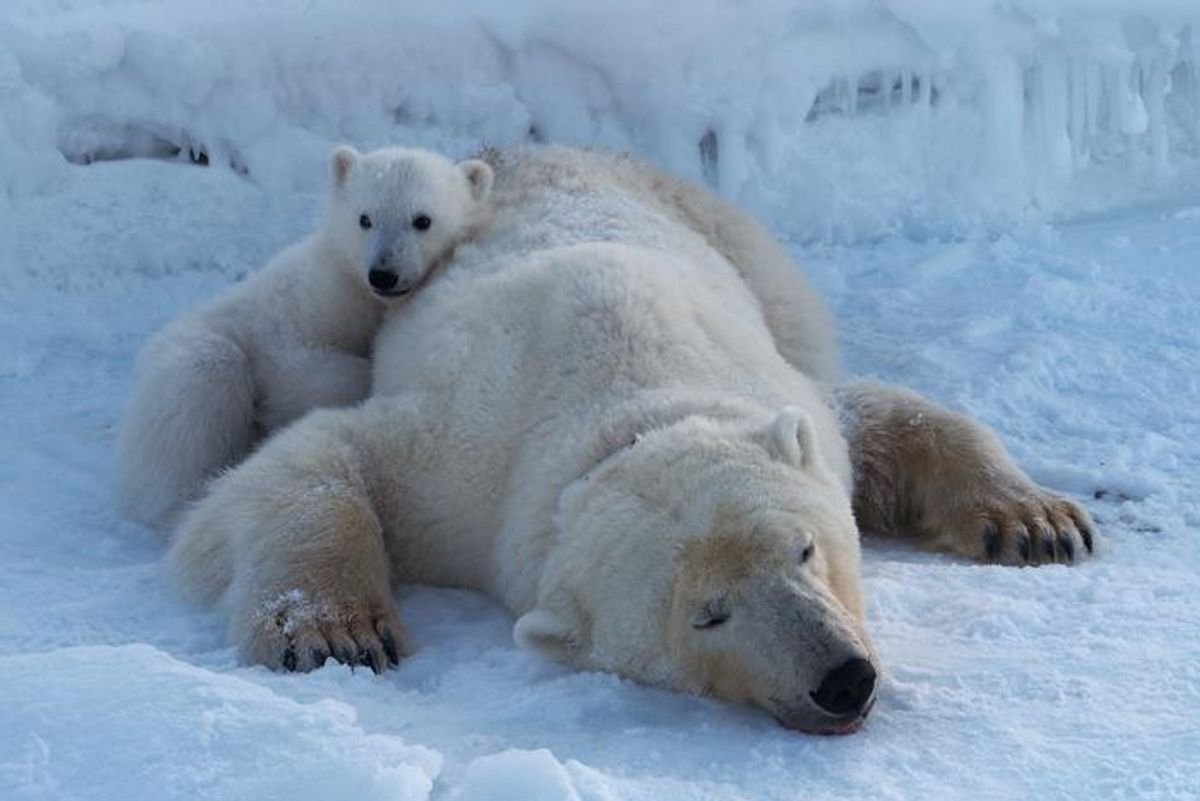
Adult Polar Bears in Svalbard Are Gaining Fat Even as Arctic Sea Ice Shrinks
Polar bears have come to symbolize the cost of a warming Arctic. As sea ice retreats, the platform they rely on to hunt prey disappears, and bears are expected to burn through fat reserves and grow thinner. But in Svalbard, a Norwegian archipelago in the Barents Sea, that pattern has not held. A new study published in Scientific Reports finds that adult polar bears in the region have improved their body condition since about 2000, even as sea ice loss accelerated.
The result stands out in one of the Arctic’s fastest-warming regions. Parts of the Barents Sea near Svalbard have warmed by up to about 35.6 degrees Fahrenheit (2 degrees Celsius) per decade since 1980, yet a 2004 census put the polar bear population at about 2,650, with no obvious decline. Why bears appeared to be holding on has remained an open question.
Measuring Polar Bear Health Over Time
To better understand this question, the researchers focused on body condition. For polar bears, body condition reflects how much fat an individual carries, which influences survival and reproduction, especially during long periods without food.

Obtaining data from the mouth measurements of an anesthetized polar bear.
(Image Credit: Jon Aars / Norwegian Polar Institute/ CC BY)
The team analyzed 1,188 capture records from 770 adult polar bears collected between 1992 and 2019 as part of a long-running monitoring program in Svalbard. During each capture, the team recorded body measurements that allowed them to estimate mass relative to body size. From those data, they calculated a body condition index, or BCI, which provides a standardized estimate of fat reserves.
The researchers then compared changes in body condition over time with environmental conditions in the Barents Sea region. A central variable was the number of ice-free days each year, representing how long bears may have reduced access to sea ice, their primary hunting platform.
Read More: Antarctic Penguins Are Breeding 13 Days Earlier Than They Did a Decade Ago — Likely Due to Climate Change
A Different Pattern Emerges in Svalbard
Over the 27-year study period, the Barents Sea lost about 100 days of seasonal sea ice, adding roughly four ice-free days each year. In other polar bear populations, that kind of rapid ice loss has been linked to declining health, as bears lose access to hunting grounds and burn through fat reserves.
But that pattern did not hold in Svalbard. Polar bear body condition declined through the 1990s, bottomed out around 2000, and then began to improve in both males and females, even as sea ice continued to retreat.
When the researchers analyzed how body condition changed alongside sea ice loss and climate patterns, they found no clear, one-to-one link between warming and declining health. Instead, the data suggested that the polar bear condition in this region was shaped by a shifting mix of environmental factors over time, rather than ice loss alone.
What Might Be Helping Svalbard’s Bears
One possible explanation for the Bears’ condition may be the recovery of land-based prey species, including reindeer and walrus, which were previously overexploited by humans. Increased availability of these animals could provide additional food sources when bears spend more time on land.

Polar bear standing on sea ice during golden hour.
(Image Credit: Trine Lise Sviggum Helgerud / Norwegian Polar Institute/ CC BY)
The authors also suggest that shrinking sea ice may cause prey such as seals to concentrate in smaller areas, potentially increasing hunting efficiency during periods when ice remains available.
At the same time, the researchers emphasize that continued sea ice loss could eventually have negative effects. Longer travel distances, higher energy demands, and reduced access to hunting grounds may push conditions beyond what bears can compensate for. The study concludes that results from one region should not be generalized across all polar bear populations, underscoring the need for continued monitoring as Arctic warming continues.
Read More: One of the World’s Longest Living Icebergs Isn’t Just Melting – It’s Turning Blue
Article Sources
Our writers at Discovermagazine.com use peer-reviewed studies and high-quality sources for our articles, and our editors review for scientific accuracy and editorial standards. Review the sources used below for this article: