
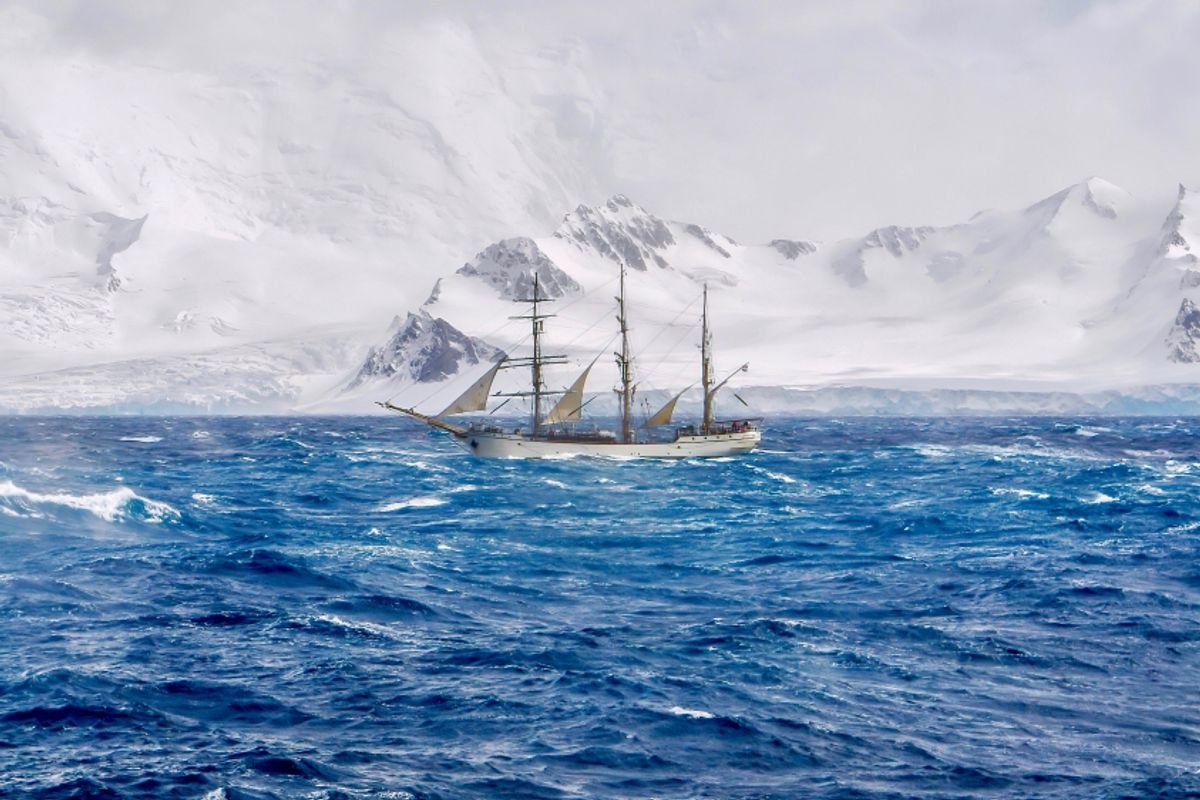
A Weak Hull May Have Sealed the Ship Endurance’s Tragic Fate Before It Even Reached Antarctica

Once considered Earth’s last frontiers, the Arctic and Antarctic regions tested human limits like no other. The Endurance expedition of 1915 remains one of history’s greatest survival stories, an enduring testament to resilience and the will to live against impossible odds.
Though celebrated for its strength, the ship was ultimately crushed by Antarctic pack ice. After the wreck’s discovery in 2022, polar explorer and scientist Jukka Tuhkuri set out to investigate its structure, seeking to determine whether construction flaws had sealed its fate. His findings, published in Polar Record, suggest the Endurance may never have been fit for such an ambitious journey, something its owner and expedition leader, Sir Ernest Shackleton, may have already known.
Uncovering Why the Endurance Sank
The Endurance set sail in January 1914 to achieve the first-ever crossing of the Antarctic continent. But during its voyage, the ship became trapped in pack ice after losing its rudder, rendering it immobile before it finally sank in the Weddell Sea.
Due to the year-round sea ice covering the site, the wreck remained undiscovered for over a century. When it was finally located in 2022, nearly 10,000 feet below the surface, it was found in remarkably preserved condition and is now a protected historic monument.
Seizing the opportunity, Tuhkuri, one of the world’s leading ice experts and a professor of solid mechanics at Aalto University in Finland, compared expedition diaries, Shackleton’s correspondence, and a naval architectural analysis of the ship. His investigation uncovered new insights into the vessel’s downfall.
Read More: 4 Famous Shipwrecks That You Can Visit
Not Built for Rough Polar Conditions
After examining historical records, Tuhkuri concluded in a press statement that “even simple structural analysis shows that the ship was not designed for the compressive pack ice conditions that eventually sank it.”
A member of the 2022 Endurance22 mission that discovered the wreck, he explained that comparisons with other polar ships of the time revealed “several structural deficiencies.”
“The deck beams and frames were weaker, the machine compartment was longer — leading to serious weakening in a significant part of the hull — plus there were no diagonal beams to strengthen the hull,” Tuhkuri said in a press release. “Not only does this challenge the romantic narrative that it was the strongest polar ship of its time, but it also belies the simplistic idea that the rudder was the ship’s Achilles’ heel.”
Initially, the ship’s final blow came from a damaged keel (the central beam running along the bottom of the hull), but the ultimate cause of its destruction lay in its inability to withstand the immense compressive forces of the Antarctic ice.
Shackleton Knew About the Ship’s Limitations
“The danger of moving ice and compressive loads — and how to design a ship for such conditions — was well understood before the ship sailed south. So we really have to wonder why Shackleton chose a vessel that was not strengthened for compressive ice,” added Tuhkuri in a press release.
According to Shackleton’s correspondence, he was aware of the vessel’s flaws. In a letter to his wife, he expressed frustration with the ship’s limitations and admitted he preferred a vessel from earlier voyages. He even “recommended diagonal beams for another polar ship when visiting a Norwegian shipyard. That same ship got stuck in compression ice for months and survived it,” said Tuhkuri in a press release.
Although it seems Shackleton knew better, his correspondence alone doesn’t reveal whether better decisions from his end could’ve prevented the ship’s fate.
“We can speculate about financial pressures or time constraints, but the truth is, we may never know why Shackleton made the choices that he made. At least now we have more concrete findings to flesh out the stories,” Tuhkuri concluded in a press release.
The Endurance may not have survived the crushing Antarctic ice, but under Shackleton’s remarkable leadership, its crew did, leaving a legacy that endures as one of the defining moments of the Heroic Age of Antarctic Exploration.
Read More: A Hidden Graveyard of 18th Century Ships Makes Hawaii’s Shipwreck Beach
Article Sources
Our writers at Discovermagazine.com use peer-reviewed studies and high-quality sources for our articles, and our editors review for scientific accuracy and editorial standards. Review the sources used below for this article: