
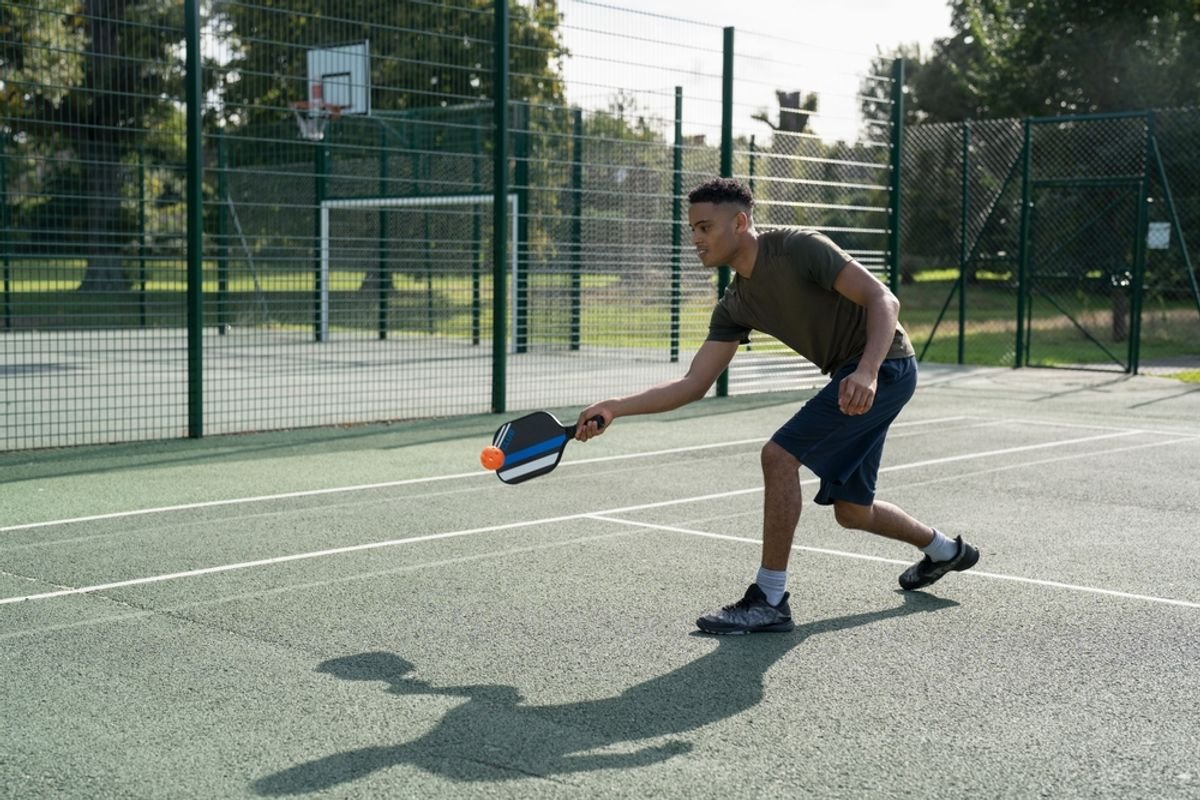
A Sharp Increase in Eye Injuries Among Pickleball Players Reflects a Worrying Health Trend

If you’re thinking of hitting the pickleball courts, you may want to pack some glasses to keep your eyes safe. Since so many people are picking up pickleball as an undemanding way to stay active, new players are likely to shrug off the idea of getting injured. But taking a pickleball straight to the eye may be enough to reconsider.
A new study published in JAMA Ophthalmology has detailed the rise of pickleball-related eye injuries over the past 20 years, emphasizing a sharp spike in the past few years. While most of these injuries amount to minor cuts and bruises, others can lead to much more severe outcomes, like retinal detachment or bone fractures.
Pickleball’s Growing Popularity
Going from an unknown backyard game to the fastest-growing sport in America, pickleball has seen astounding growth over the past few years. Right now, nearly 20 million Americans are playing the trendy sport, a 311 percent increase compared to figures three years ago.
Pickleball has scaled the summit of America’s favorite pastimes for several reasons, one of them being its accessibility. Because it’s low-impact, requiring less explosive movements than other sports, pickleball is often seen as the perfect exercise for seniors or those with lower mobility. The sport improves balance, flexibility, and strength in older populations, and it also helps maintain cognitive health and social connections.
But as millions flock to pickleball courts without prior training or conditioning, researchers are now stressing the importance of safety measures for those just getting started with the sport.
Read More: Kids See Benefits From Sports Through Adulthood
Eye Injuries on the Rise
The new study found that eye injuries have become much more frequent for pickleball players. To consolidate data on pickleball-related eye injuries, researchers used the National Electronic Injury Surveillance System (NEISS), a probability sample of hospitals in the U.S. that focuses mainly on collecting data on injuries related to consumer products.
Taking NEISS data from 2005 to 2024, the researchers settled on an estimated 3112 pickleball-related eye injuries over these years. They further specified that 88 percent of these injuries occurred from 2022 to 2024, and in 2024 alone, there were an estimated 1262 cases.
The researchers noted that these injuries — mostly occurring in those over 50 years old — were often caused by a pickleball hitting players in the eye.
“I thought falls would be a higher proportion of the injuries just based on the age bracket. But it turned out that direct ball injuries were the most common,” said co-author author Corey Lacher, a resident at Rutgers New Jersey Medical School, in a statement.
Serious eye injuries in pickleball are rare, but they can sometimes lead to retina damage. This may take the form of retinal tears, which can cause blurred vision, or retinal detachment, which can lead to permanent vision loss if left untreated.
Since eye injuries are a growing concern for pickleball players, health experts have called upon organizations like the USA Pickleball Association to establish standards for eye protection. While eyewear is not required for pickleball, the use of polycarbonate safety glasses is recommended.
Sprains and Strains
Health experts are also bringing attention to other musculoskeletal injuries in pickleball; a separate 2025 study identifying 1,238 pickleball-related injuries between 2013 and 2022 found that the most common injuries were fractures (27 percent) and sprains (27 percent). Most of these injuries (91 percent) occurred in players aged 50 and older.
Pickleball players, both young and old, may experience overuse and strain injuries. These usually result in persistent pain in the shoulders, knees, or elbows that develops over time instead of stemming from one particular movement. These problems can be alleviated with physical therapy, rest, or braces.
This article is not offering medical advice and should be used for informational purposes only.
Read More: Extreme Fatigue: 4 of the Longest-Lasting Sporting Events
Article Sources
Our writers at Discovermagazine.com use peer-reviewed studies and high-quality sources for our articles, and our editors review for scientific accuracy and editorial standards. Review the sources used below for this article: