
A Prehistoric Bear Attack Ended in the Gruesome Death of a Teenage Boy Around 27,000 Years Ago

Being attacked by a bear often ends in tragedy, and this is certainly no exception for prehistoric victims. One person who lived in Paleolithic-era Italy — a teenager known by archaeologists as “Il Principe” — may have fallen prey to a horrific bear attack, experiencing terrible agony in his final moments.
A study recently published in the Journal of Anthropological Sciences has affirmed that Il Principe was mauled by a bear 27,500 years ago. The boy, whose skeleton was unearthed at the Arene Candide cave in northwestern Italy in 1942, succumbed to his wounds only a few days after the attack. Il Principe wasn’t forgotten, however; his burial site, a lavish display filled with various items, was likely made to memorialize the deceased teenager.
Read More: 14th Century Tooth Reveals Grim Fate of Edinburgh Teen Killed by the Black Death
A Grisly End for “The Prince”
Il Principe’s cause of death has always been a mysterious cold case for archaeologists. They’ve known that the boy — somewhere around 14 to 16 years old at the time of his death — suffered a traumatic event that left him with severe damage to his collarbone, jawbone, shoulder blade, and cervical vertebrae.
Over the years, it was believed that Il Principe died from an unfortunate hunting accident, which was not all that uncommon in the Paleolithic era. Paleolithic humans were known to hunt large carnivores, but skeletal evidence of fatal encounters with these animals is rare in the prehistoric fossil record.
The new study, however, challenges the “hunting accident” view. Upon re-examining Il Principe’s skeleton, researchers found marks on the bones that suggested a bear attack was the likely cause of death.
“We can say with great certainty that the youth fell prey to a large carnivore, most likely a bear,” said co-author Julien Riel-Salvatore, an anthropologist at Université de Montréal, in a statement. “He then survived his injuries for some time in agony before dying and being buried lavishly, hence his nickname Il Principe, ‘the prince’ of Arene Candide Cave.”
Finding Wounds on Bones
Aside from the previously identified wounds on Il Principe, the researchers found several bone lesions that hadn’t been seen before. One of these marks was a groove on the cranium; the researchers were able to rule out various alternate explanations for the wound (by interpersonal violence using lithic instruments or abrasion by dragging, for example) due to the groove’s shape and location.
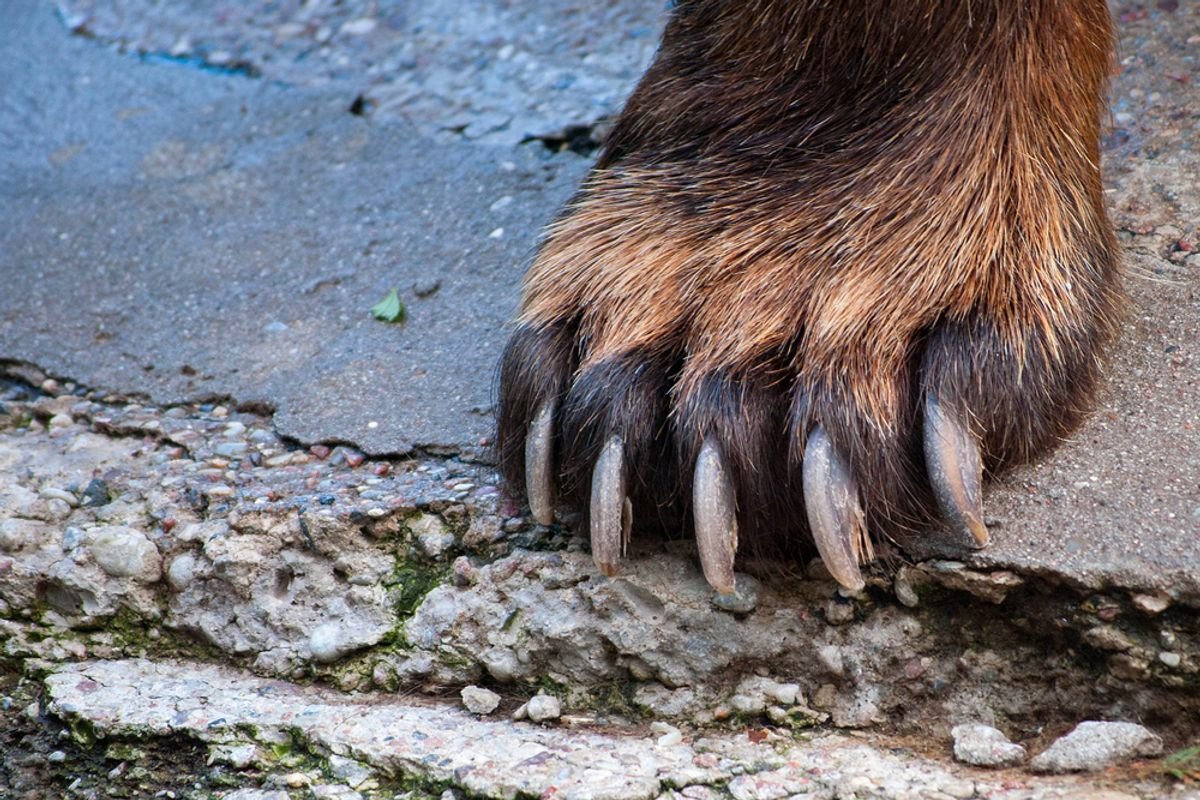
These same features were aligned with carnivore activity — in particular, it appears that a bear (either a brown bear or a now-extinct cave bear) may have swiped its claws at Il Principe’s head. A puncture mark on the fibula also indicated that the bear would have bitten the boy’s leg.
The researchers found that Il Principe’s bones showed signs of early healing, proving that the death wasn’t immediate. The boy probably survived for 2 to 3 days, as no major arteries were severed. He may have then died from organ failure, internal bleeding, or severe brain trauma.
Il Principe’s story, somehow, gets even sadder; before the bear attack, he had sustained a fracture of his left little toe and joint problems in his right foot that left him lame. Because of this, he may have been unable to move fast enough to escape the attack.
An Elaborate Prehistoric Burial
After Il Principe’s death, the people around him gave him a proper burial; his skeleton was decorated with ivory pendants and antler batons, and a flint blade was put in his right hand. A headdress made out of hundreds of shells and several deer teeth was placed atop his skull. Lumps of yellow ochre were laid on damaged spots to cover wounds.
The burial, the researchers believe, was done in a way that acknowledged Il Principe’s suffering before his death. Similar considerate acts have been seen in other Paleolithic burials.
The researchers believe that such burials were done to acknowledge “exceptional individuals and exceptional events.” Il Principe’s death, in the end, seemed to have a clear and powerful effect on the people around him.
Read More: 3,500-Year-Old Teeth Identify Turning Point in Bronze Age History of Central Europe
Article Sources
Our writers at Discovermagazine.com use peer-reviewed studies and high-quality sources for our articles, and our editors review for scientific accuracy and editorial standards. Review the sources used below for this article: