
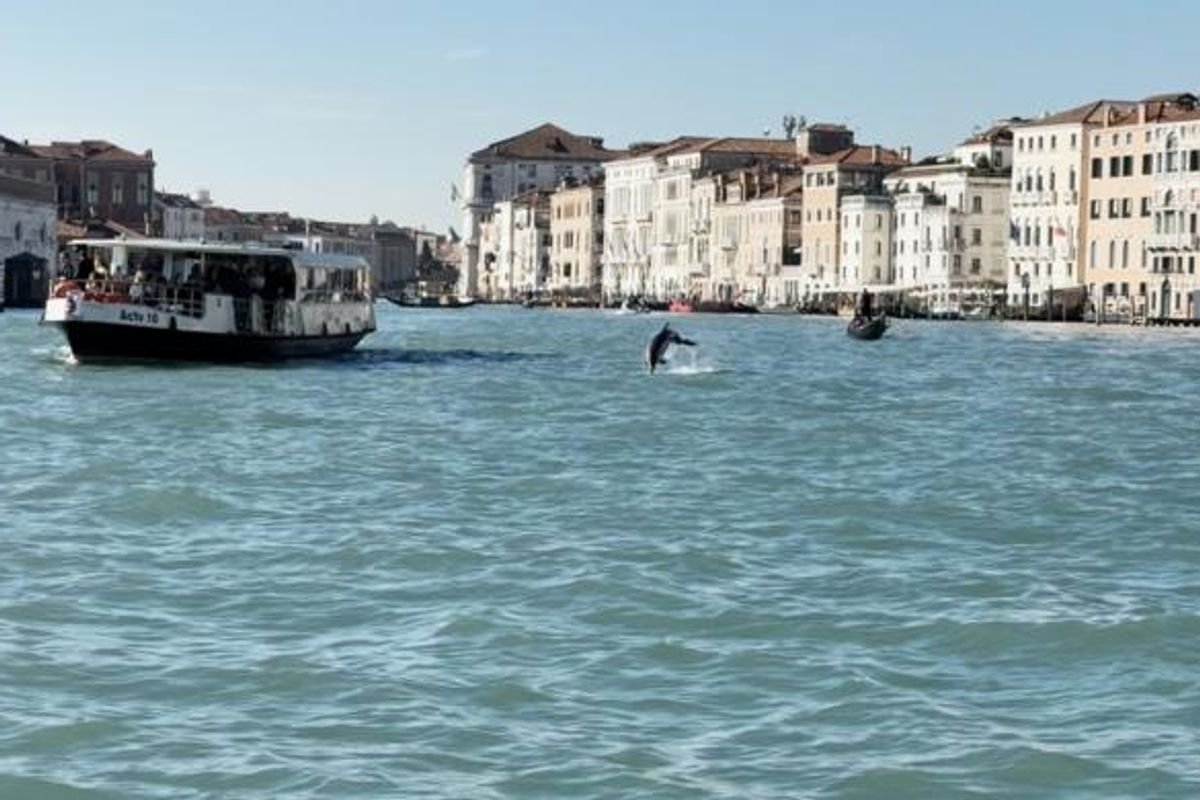
A Lone Dolphin Takes Up Residence in Front of St. Mark’s Square, Venice
When you picture Venice, you probably imagine gondolas gliding past centuries-old palaces. What you don’t expect to see is a bottlenose dolphin playing in the water in front of St. Mark’s Square.
Yet that’s exactly what happened last summer, when a lone dolphin nicknamed Mimmo began cruising through the Venetian Lagoon, and eventually settled in San Marco Basin, one of the busiest tourist hubs in Venice. Bottlenose dolphins typically travel in small social groups, making extended solitary stays like this relatively rare.
Now, a study published in Frontiers in Ethology documents the dolphin’s movements over several months and explores what his presence reveals about wildlife management in urban waters. The researchers say Mimmo’s appearance isn’t the real concern. Human behavior is.
“We present the case of one of the most charismatic animals in one of the most iconic cities: a solitary dolphin in Venice,” said senior author Guido Pietroluongo in a press release. “Our observations document this animal’s remarkable adaptation to an unusual context and highlight the need to manage human behavior to ensure its welfare.”
A Solitary Dolphin in Venice
Bottlenose dolphins once moved freely throughout the Adriatic Sea, including the Venetian Lagoon. While common dolphins largely disappeared from the region before the 1970s due to human impact, bottlenose dolphins have proven more adaptable. Still, they have largely avoided lagoon waters in recent decades, making Mimmo’s extended stay notable.

The bottlenose dolphin named Mimmo swims in Venice.
(Image Credit: Fondazione Musei Civici di VeneziaFondazione Musei Civici di Venezia)
Researchers began monitoring the dolphin weekly after the first sighting in June 2025. Over several months, Mimmo traveled from the southern lagoon toward central Venice, where he continues to feed on mullet and display behavior typical of the species.
“Observing bottlenose dolphins in urban areas is not particularly surprising, as they are extremely adaptable and opportunistic marine mammals,” said Pietroluongo.
In other words, the dolphin doesn’t appear distressed or disoriented. He appears to be adjusting.
The Real Risk Isn’t the Lagoon — It’s Us
While dolphins can navigate coastal environments, settling directly in front of one of Europe’s busiest tourist landmarks introduces new risks. The San Marco Basin is crowded with water taxis, private boats, and heavy marine traffic.
Boat propellers pose an obvious danger. But researchers note that open waters aren’t necessarily safer; dolphins there face threats from fisheries and entanglement.
In Venice, the greatest danger may come from people approaching too closely, chasing the dolphin with boats, or attempting to touch or feed him.
“This situation is primarily about managing human behavior rather than managing the dolphin,” Giovanni Bearzi, first author of the study, said in the press release.
Measures such as controlling boat speed, limiting close approaches, and enforcing regulations that prohibit disturbing protected wildlife are critical. Early attempts to drive the dolphin back into open sea using acoustic deterrents proved unsuccessful and are not recommended. Capturing and relocating him would likely pose greater risks than benefits.
Read More: Like Kindergarten Buddies, Male Dolphins That Keep Friendships Can Live Longer
What Mimmo Reveals About Living With Wildlife
The case of Venice’s solitary dolphin raises the question: How should modern cities respond when wild animals enter urban environments?
Dolphins have accompanied human maritime activity for millennia. What makes this case unusual isn’t simply Mimmo’s presence; it’s the setting. A protected marine mammal now swims daily in front of one of the world’s most visited landmarks.
“What is truly unusual is not the dolphin’s presence, but the persistent difficulty humans have in respecting such animals today,” Bearzi concluded.
As coastal cities grow and marine ecosystems shift, encounters like this may become more common. Whether they become conservation success stories, or cautionary tales, may depend less on the animals themselves and more on how humans choose to behave around them.
Read More: Like Dolphins, This Tiny Reef Fish Sees and May Be Experimenting With Its Reflection
Article Sources
Our writers at Discovermagazine.com use peer-reviewed studies and high-quality sources for our articles, and our editors review for scientific accuracy and editorial standards. Review the sources used below for this article: