
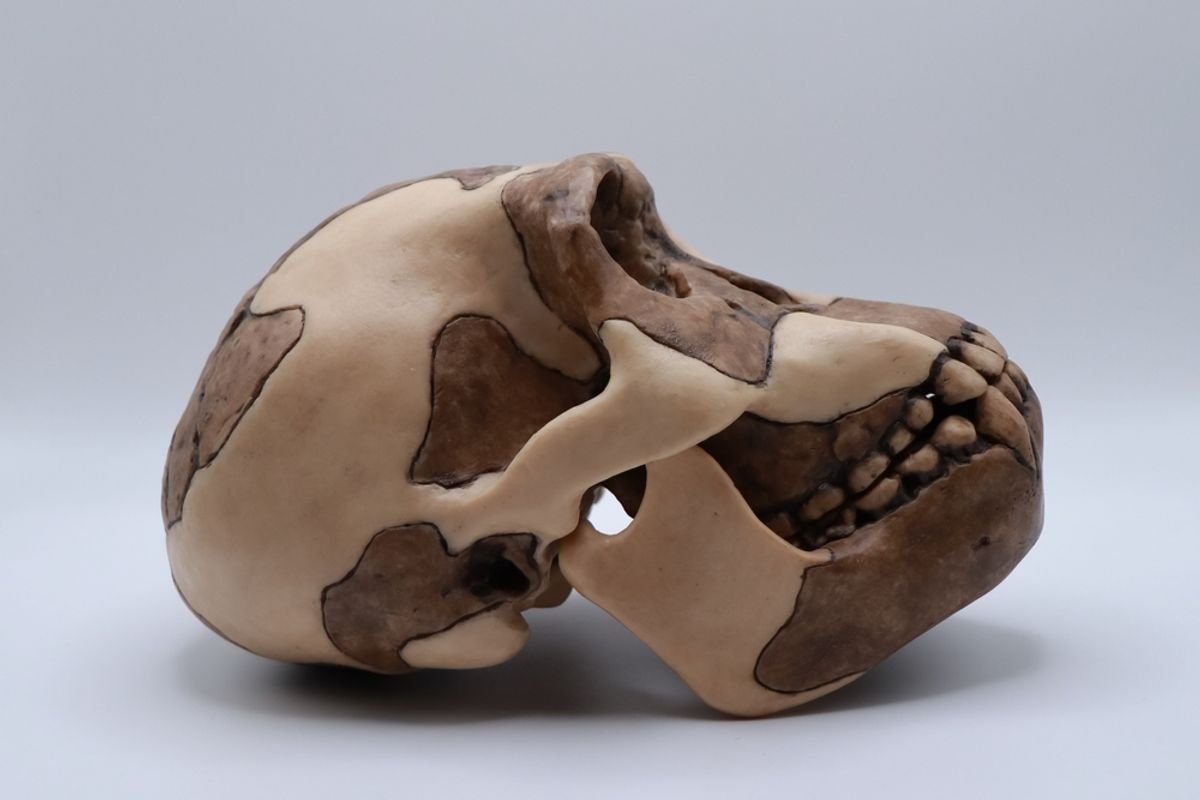
A 2-Million-Year-Old Skeleton Shows Early Humans Were Still Built for the Trees

A remarkably complete fossil from northern Kenya is giving scientists their clearest picture yet of what one of humanity’s earliest ancestors actually looked like.
An international research team has described the oldest and most complete Homo habilis skeleton ever found, dating back just over 2 million years. The discovery fills a major gap in the fossil record and offers rare insight into a species that may have given rise to Homo erectus and, eventually, modern humans.
Found in East Turkana and covered in The Anatomical Record, the fossil provides the most comprehensive postcranial evidence of Homo habilis. Until now, this pivotal species was known mostly from skull fragments and isolated bones, leaving major questions about its body proportions and movement unanswered.
Read More: 773,000-Year-Old Fossils Capture a Moment Before Human Lineages Split
A New Fossil of Homo habilis
The newly reported specimen, known as KNM-ER 64061, dates between 2.02 million and 2.06 million years ago. It includes both collarbones, fragments of the shoulder blades, complete upper and lower arm bones, parts of the pelvis, and a section of the sacrum. Crucially, these bones were found alongside a nearly complete set of mandibular teeth.
That dental evidence allowed researchers to confidently link all of the bones to a single individual — and to Homo habilis itself. Prior to this find, only a few extremely fragmentary partial skeletons had been definitively tied to diagnostic dental remains.
“Indeed, there are only three other very fragmental and incomplete partial skeletons known for this important species,” said lead author Fred Grine in a press release.
Researchers first uncovered the bones during fieldwork in 2012. Additional excavations later revealed more fragments scattered nearby, which researchers took a decade to painstakingly reassemble and analyze.
What The Fossil Reveals About Early Human Ancestry
Homo habilis lived between roughly 2.5 million and 1.4 million years ago and is thought to be ancestral to Homo erectus, a species marked by larger bodies, longer legs, and more efficient walking.
The individual found stood about 23 inches tall and weighed an estimated 65 to 70 pounds. While many features of the limb bones resemble those of Homo erectus and later members of the genus Homo, the body was shorter, lighter, and built differently. The arms were proportionally longer and stronger, with forearms that were relatively longer than the upper arms — traits that echo much older hominins such as Australopithecus afarensis.
The shoulder and arm bones also had unusually thick outer bone layers, a feature seen in australopiths and early Homo fossils. Together, these traits suggest a lifestyle that may have still involved significant climbing or other forms of upper-body use, even as early humans were adapting to life on the ground.
How Can We Learn More About Homo habilis?
While the upper limbs of Homo habilis are now coming into sharper focus, major questions remain, especially about their legs.
“Going forward, we need lower limb fossils of Homo habilis, which may further change our perspectives on this key species,” explained study contributor Ashley S. Hammond.
Until those lower-limb fossils are found, this new specimen stands as a rare and invaluable snapshot of a species that represents a critical crossroads in human evolution.
Read More: Homo Ergaster: The Early Human Who Looked Almost Like Us
Article Sources
Our writers at Discovermagazine.com use peer-reviewed studies and high-quality sources for our articles, and our editors review for scientific accuracy and editorial standards. Review the sources used below for this article:
This article references information from the recent study published in The Anatomical Record: New partial skeleton of Homo habilis from the upper Burgi Member, Koobi Fora Formation, Ileret, Kenya