
84-Million-Year-Old Horned-Dinosaur Fossils Rewrite Europe’s Prehistoric Record

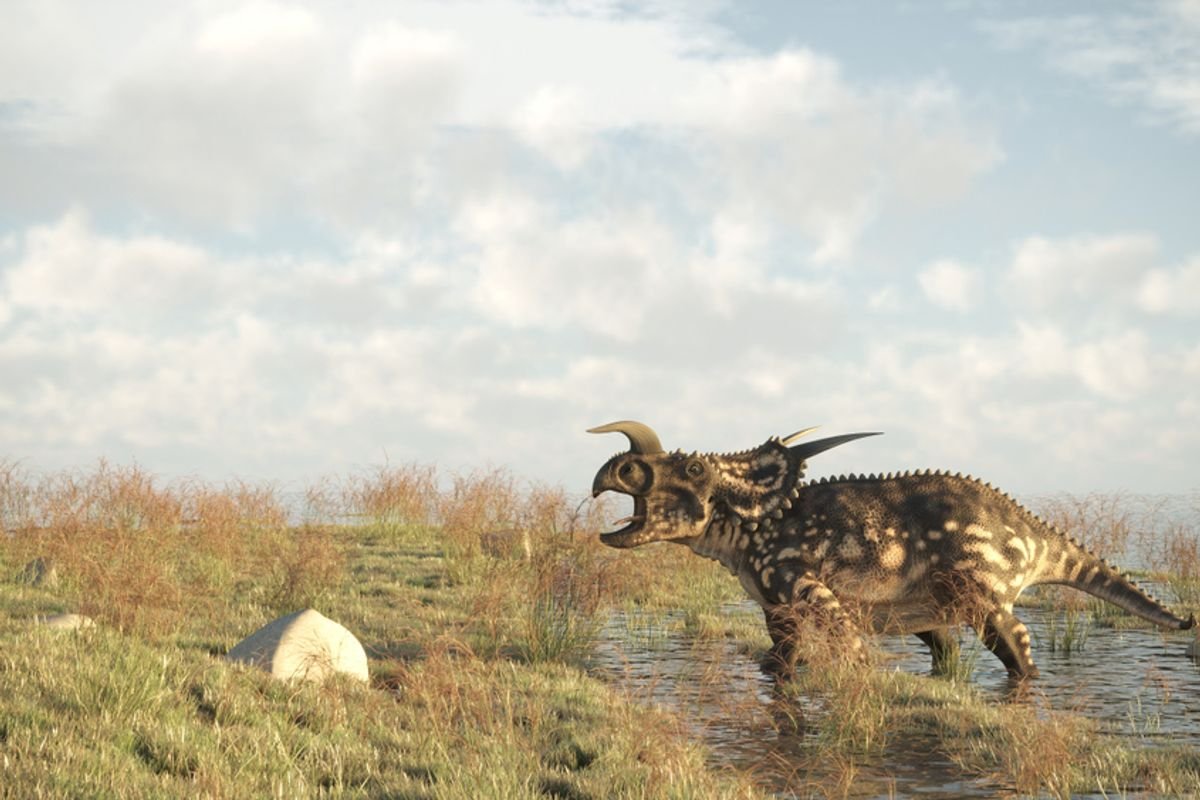
Horned dinosaurs lived in Europe during the Late Cretaceous, despite being thought largely absent from the continent’s fossil record. A new study published in Nature shows that several European dinosaurs long classified as other plant-eaters — including a species called Ajkaceratops — are actually ceratopsians, the group that includes Triceratops.
The reclassified fossils date to about 84 million years ago, when Europe was a chain of islands along the margins of the Tethys Sea. The study also finds that some dinosaurs previously assigned to a European-only group known as rhabdodontids were misidentified, helping explain why ceratopsians appeared to be missing from the continent for so long.
“While Iguanodon and Triceratops look very different, the groups they are part of both evolved from a common ancestor, meaning they’ve both inherited certain characteristics,” said lead author Susannah Maidment in a press release. “They also independently evolved four-leggedness, complex chewing mechanisms, and a large body size. This means that their teeth and limbs look quite similar, both because of their shared history and way of life. So, when we only have small parts of the skeleton to look at, it can be quite difficult to tell what’s what.”
Read More: 160-Million-Year-Old Fossils Rewrite the Story of Dinosaur Flight
New Fossils Redefine Ajkaceratops
Using newly recovered skull material from Ajkaceratops, along with CT scans and multiple analyses of evolutionary relationships, the researchers were able to place the species more confidently within the ceratopsian family tree.
That work also revealed that a dinosaur previously described as a separate species, Mochlodon, turned out to be the same animal as Ajkaceratops. Beyond that, the analyses showed that several other European dinosaurs long considered rhabdodontids — a group thought to be unique to the continent — also belong within Ceratopsia.
“Because the first fossils discovered of Ajkaceratops were so incomplete, it meant lots of scientists doubted it was a ceratopsian. What’s so exciting about the new Ajkaceratops fossil is that it allows us to confirm that horned dinosaurs roamed the islands of Cretaceous Europe, but also challenges us to radically rethink our understanding of these ancient ecosystems,” said co-author of the paper, Richard Butler, in a press release.
Europe’s Island Geography Shaped Ceratopsian Migration
During the Late Cretaceous, Europe looked very different from today. Rising sea levels had broken the continent into a patchwork of islands separated by shallow seas, creating ecosystems shaped by isolation and intermittent connections to other landmasses.
That geography may help explain why European ceratopsians remained smaller and more difficult to recognize than their later relatives in North America. It also places Europe in a more central role in the study of how ceratopsians moved and evolved across the Northern Hemisphere.
The earliest members of the group, such as Yinlong, evolved in Asia before spreading outward. From there, ceratopsians made multiple dispersals into North America, where they eventually gave rise to large, frilled species like Triceratops. Europe sits between those regions — a position that makes it a plausible route for movement, even if direct fossil evidence was long difficult to identify.
“We know that dinosaurs were able to cross the Atlantic, which was just starting to open during the Cretaceous,” Maidment said. “Dinosaurs such as Allosaurus have been found in Portugal and the U.S.A., showing that they had at least some ability to move between continents. Lots of animals can swim and, as the islands of the central European basin weren’t that far apart, it would make sense that dinosaurs were able to island hop.”
Reframing Europe’s Dinosaur Record
Europe now appears to have been part of the broader ceratopsian world, even if its fossils were harder to recognize because of anatomical overlap with other plant-eating dinosaurs.
“Horned dinosaurs like Triceratops are some of the most iconic dinosaurs, but most of them are from North America, and now we’ve found them in Europe, hiding in plain sight because they’ve been misidentified for decades as other types of dinosaurs,” said co-author Steve Brusatte.
Read More: Thousands of Dinosaur Footprints Found Close to Where Italy Will Host Winter Olympics
Article Sources
Our writers at Discovermagazine.com use peer-reviewed studies and high-quality sources for our articles, and our editors review for scientific accuracy and editorial standards. Review the sources used below for this article: