
3,000 Years of Ancient Diets in Poland Reveal Migration and Early Social Divisions

What people eat can reveal far more than what they prefer to have on the menu. New research tracing the diets of prehistoric communities in north-central Poland shows how food choices reflected adaptation, migration, and even early social divisions over nearly three thousand years.
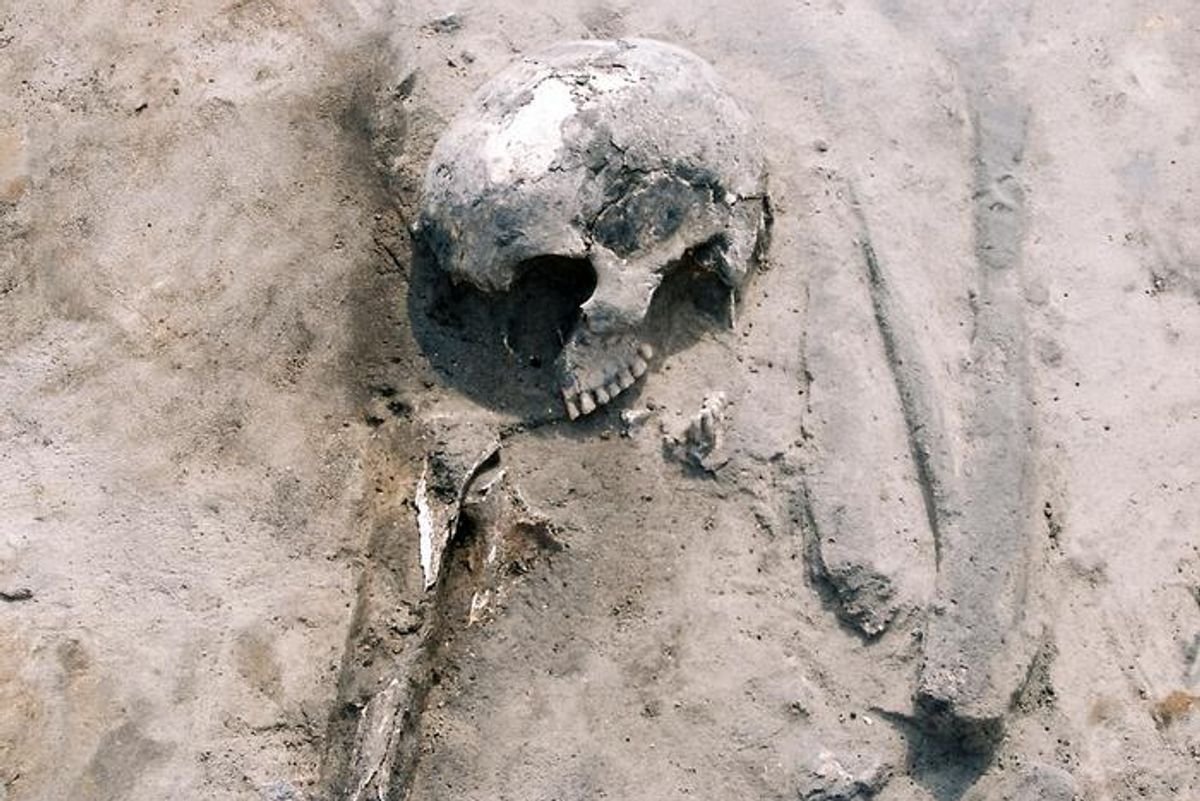
The study, published in Royal Society Open Science, involves an international team of archaeologists and scientists who analyzed human remains from 60 individuals spanning the Neolithic to the Bronze Age. This period included major turning points in Central European prehistory, from the arrival of groups with steppe ancestry to the first widespread use of millet.
Read More: Ancient Dental Plaque Is Changing What We Know About Medieval Diets
How Ancient Diets Teach Us About Identity
Traditional archaeology has struggled to capture daily life during the transitional time periods represented in this study. To move beyond those limits, researchers combined archaeological and anthropological analysis with radiocarbon dating, ancient DNA, and stable isotope measurements of carbon and nitrogen. Together, these tools allowed the team to reconstruct diets, farming strategies, and even aspects of social organization that would otherwise remain invisible.
One of the insights revealed comes from the diets of Corded Ware communities, who arrived in the region around 2800 B.C.E. Archaeologists long assumed these groups would favor open grasslands for herding. Instead, isotopic evidence from human bones suggests that early Corded Ware people grazed their animals in forests or wet river valleys — marginal landscapes away from the fertile soils farmed by local communities.
Several centuries later, that pattern changed. Their diets began to resemble those of neighboring farmers, pointing to the gradual adoption of local herding practices. Rather than imposing a single way of life, newcomers appear to have adjusted to the social and ecological realities they encountered.
The Important Role of Millet
Food also became a marker of identity with the introduction of millet. Across much of Eurasia, broomcorn millet spread rapidly and became a staple. In north-central Poland, however, its uptake was uneven.
From about 1200 B.C.E., some communities relied heavily on millet, while others consumed little or none. These dietary differences aligned with distinct burial traditions. Some groups returned to older communal tombs reused across generations, while others adopted unusual paired burials, placing the dead foot-to-foot in elongated pits.
The pattern suggests that communities tied food choices closely to group boundaries and cultural belonging, not just agricultural practicality.
How Food Helps Uncover Invisible Histories
Dietary evidence in this study also hinted at early social inequalities. Variations in nitrogen isotope values reflect differences in access to animal protein, a higher-status food resource.
During the Early Bronze Age, some individuals consistently consumed more animal products than others, suggesting emerging hierarchies that are not obvious from grave goods alone.
Taken together, the findings challenge the idea that peripheral regions simply copied cultural centers. Instead, prehistoric communities in north-central Poland developed their own solutions, blending innovation with adaptation.
By reading food as a historical record, researchers are uncovering how ancient societies navigated environmental change, migration, and identity — one meal at a time.
Read More: 100 Years of Menus Reveal How Food Has Quietly Shaped Political Alliances
Article Sources
Our writers at Discovermagazine.com use peer-reviewed studies and high-quality sources for our articles, and our editors review for scientific accuracy and editorial standards. Review the sources used below for this article: