
3 Superhuman Traits That Some Are Born With — And Others You Can Learn

Spiderman can crawl up walls. Cyclops can blast energy beams from his eyes. Wonder Woman has both super-strength and super-agility. But plenty of ordinary people have superpowers — or at least what seem to be superhuman talents.
Ordinary humans may not be able to fly, lift buildings, or run as fast as a speeding bullet, but there are a few seemingly superhuman abilities we humans do have. Some we can be born with, and others we may be able to teach ourselves.
Read More: How Alex Honnold Can Stay Cool and Collected as He Climbs the Impossible
1. Super-Recognition: Faces Stand Out in a Crowd
Have you ever encountered someone and thought, “I know I’ve seen that face somewhere before,” but you just can’t remember who it is or where you’ve met them? Super-recognizers don’t have that problem. These are people who are far better than most people at recognizing faces — even the faces of people they haven’t seen in years.
Richard Russell, professor of psychology at Gettysburg College, first described the condition in a 2009 paper in Psychonomic Bulletin & Review. Super-recognition is the other end of the spectrum from prosopagnosia, the inability to recognize faces, he says. There are specific brain areas involved in face perception, most famously the Fusiform Face Area (FFA), but so far, no definitive research has explained the phenomenon of super-recognition.
Like its counterpart, prosopagnosia, super-recognition is something of a stealth condition.
“We don’t really know that we have it unless we take a formal test. Or maybe we might learn through time that we’re seeing things differently in a subtle way than other people are,” says Russell.
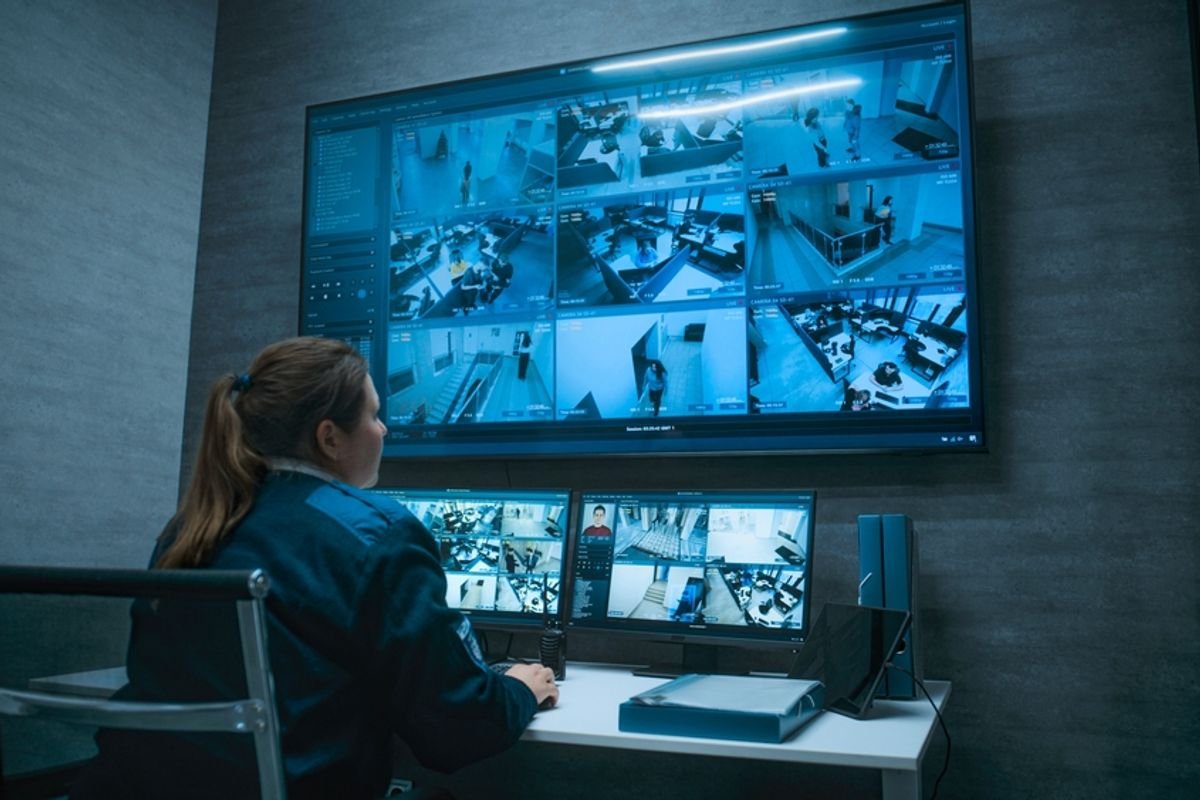
Even people who know they’re super-recognizers tend to keep that fact to themselves. Telling people that you recognize them when they aren’t expecting it can sometimes make you seem a bit “stalkerish,” says Russell. Still, the skill can come in handy. In the U.K., police departments recruit super-recognizers for tasks such as identifying suspects caught on CCTV and scanning crowds at public events for known offenders, according to the London Assembly.
2. Super Memory and Mnemonists: Practice Makes Perfect
Some people’s superpower is memory. Memory champions, sometimes called mnemonists, are people who can memorize long lists of items, such as numbers or randomly organized playing cards. To win the 2025 Memory League World Championship, Vishvaa Rajakumar memorized 80 random digits in 13.5 seconds.
As impressive as these feats are, memonists are more like Batman than Superman — their ability is acquired. Super memorizers learn techniques to help them recall long lists. One such technique, the method of loci, also known as the Memory Palace, involves assigning each item on the list you want to memorize a specific place on an imagined map, perhaps the house you grew up in or the neighborhood where you live.
You then mentally walk through the house or the neighborhood, picking up those memories. It’s not quite that simple, nor as easy as it sounds, but it is effective — and with practice, most people can master it.
That these talents aren’t innate doesn’t mean the brains of these memory champs are just like the brains of the rest of us. A 2017 study in Neuron found that practicing these techniques can result in lasting changes in the brain’s pattern of connections. Of course, to make this technique work for you, you have to practice, and it only helps with the things you’re trying to memorize. Even super memorizers occasionally forget where they left their car keys.
3. Echolocation: Using Our Ears to Navigate
When you think of echolocation, you probably think of bats or whales. But humans can echolocate, too. When humans echolocate, they project clicks made with their mouths or sometimes finger snaps, and the sounds bounce off any objects in front of them, according to a study in Frontiers. They can estimate how far away an object is by how long it takes the echo to come back. Whether the object is on the right or the left can be determined by noting which ear the echo is loudest in.
Lore Thaler, a neuroscientist at Durham University in the U.K., studies the phenomenon and trains people in the technique. It was once thought that only blind people could master this skill. However, Thaler and her team have proven that false. They’ve trained both sighted and blind people, and have found little difference in their ability to learn the method.
“It’s not terribly difficult,” she says.
However, Thaler does say that because it’s more beneficial for blind people, they engage with the training more, though she points out that the technique is an adjunct, not a replacement for guide dogs and long canes.
“If we find people who use echolocation at what we call expert level, these are all people who are blind, because for them, it’s more useful than for people who are typically sighted,” she says. While the benefits are obvious for blind people, Thaler says that sighted people who’ve learned the technique report that it increases their overall sensitivity to sound in general. “They quite enjoy it,” she says.
Thaler’s research has found that echolocation is first processed in the same brain centers as any other sound, such as the primary auditory cortex. Then it activates other areas, including many areas that are associated with vision.
So those are just a few of the seemingly superhuman traits of ordinary people. Perhaps more of us should wear capes.
Read More: Childhood Games Like Super Mario Bros. Can Boost Happiness and Reduce Burnout
Article Sources
Our writers at Discovermagazine.com use peer-reviewed studies and high-quality sources for our articles, and our editors review for scientific accuracy and editorial standards. Review the sources used below for this article: