
160-Million-Year-Old Fossils Rewrite the Story of Dinosaur Flight

Dinosaur feathers are usually described as evidence of flight. But when researchers recently examined fossils preserved with their feathers intact, and found patterns of feather molting, they discovered a different story.
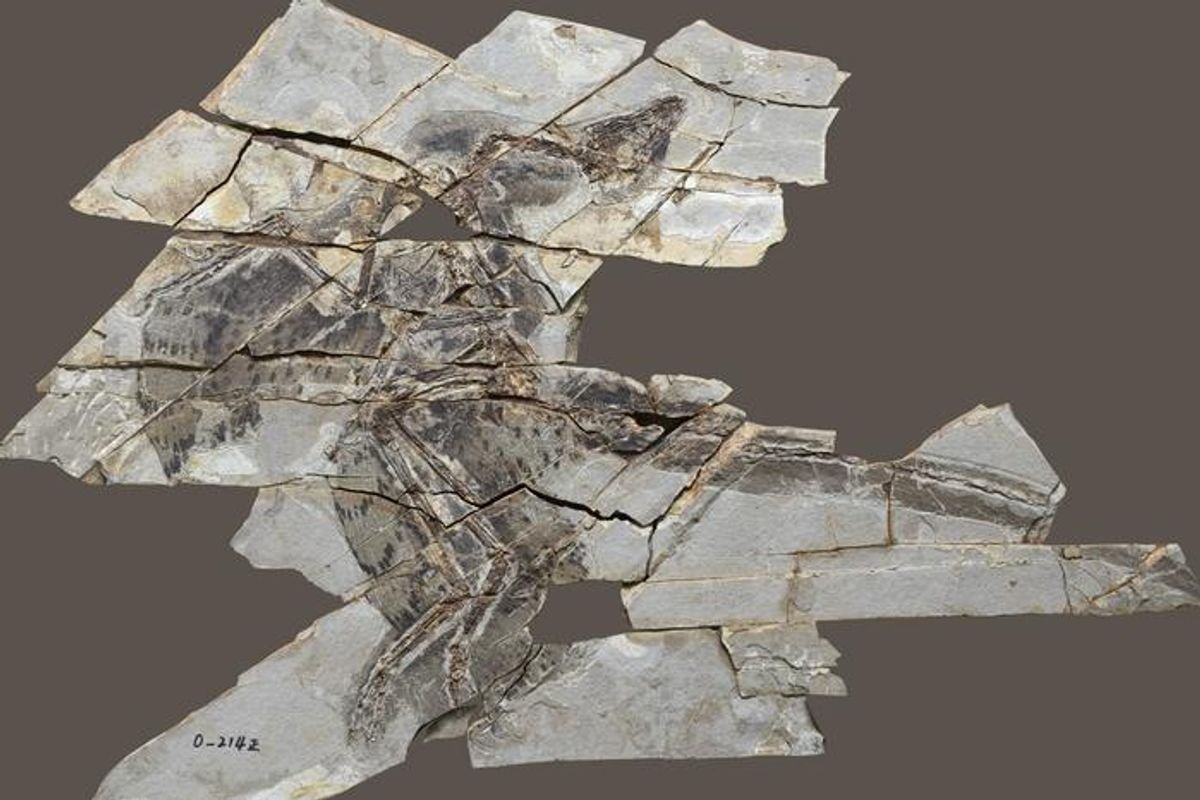
In a new study published in Communications Biology, researchers analyzed nine dinosaur fossils dating back about 160 million years and found that the feathered dinosaur Anchiornis showed molting patterns similar to those seen in flightless birds today. The findings suggest that some dinosaurs may have developed wings — and later lost the ability to fly — revealing a more complex evolutionary path toward flight than previously assumed.
“Feather molting seems like a small technical detail — but when examined in fossils, it can change everything we thought about the origins of flight. Anchiornis now joins the list of dinosaurs that were covered in feathers but not capable of flight, highlighting how complex and diverse wing evolution truly was,” said Dr. Yosef Kiat, an ornithologist specializing in feather research, in a press release.
When Feathers Appeared Before Flight
Dinosaurs split from other reptiles roughly 240 million years ago, and feathers appeared relatively soon after — lightweight, protein-based structures that likely first evolved for insulation and then flight.
By about 175 million years ago, a group known as Pennaraptora had emerged — the closest known relatives of modern birds and the only dinosaur lineage to survive the mass extinction 66 million years ago. Just as modern ostriches and penguins retain wings without flying, some early feathered dinosaurs may have followed a similar path.
Read More: 16,000 Fossilized Footprints Reveal South America’s Forgotten Dinosaur Highway
How Feather Molting Reveals Dinosaurs Flight
In the new research, what set these fossils apart is the level of detail preserved in their wing feathers. The feathers retained their original color patterns — pale feathers marked by dark spots near the tips — giving researchers an opportunity to examine how the wings functioned in life, not just how they were shaped.
Those markings formed a continuous line along the wing’s edge, allowing researchers to trace wing structure and distinguish fully grown feathers from those still developing. In living birds, that distinction is revealing, because feather growth and replacement follow different rules in flying and non-flying species.
Feathers develop over several weeks before disconnecting from the blood vessels that support their growth, becoming inert tissue. As those feathers wear down, they are shed and replaced through molting.
“Birds that depend on flight, and thus on the feathers enabling them to fly, molt in an orderly, gradual process that maintains symmetry between the wings and allows them to keep flying during molting. In birds without flight ability, on the other hand, molting is more random and irregular. Consequently, the molting pattern tells us whether a certain winged creature was capable of flight,” Kiat explained.
What Feather Molting Adds to the Fossil Record
In the fossils examined in this study, newly grown feathers appeared unevenly and without the symmetry seen in flying birds today. That irregular pattern suggests the wings were not being maintained under the tight constraints required for sustained flight.
Fossils that preserve feathers are rare to begin with, and those that retain visible color patterns are rarer still. In this case, unusual burial conditions in eastern China prevented the feathers from decaying, preserving details that are almost always lost.
Beyond its implications for flight, the study underscores how overlooked details in fossilized soft tissue can reshape long-standing ideas about extinct animals. Feather growth patterns offer a way to probe behavior directly, suggesting that fossils may still hold untapped clues about how dinosaurs lived.
Read More: 70-Million-Year-Old Dinosaur Egg Reveals Ancient Nesting Clues
Article Sources
Our writers at Discovermagazine.com use peer-reviewed studies and high-quality sources for our articles, and our editors review for scientific accuracy and editorial standards. Review the sources used below for this article: